
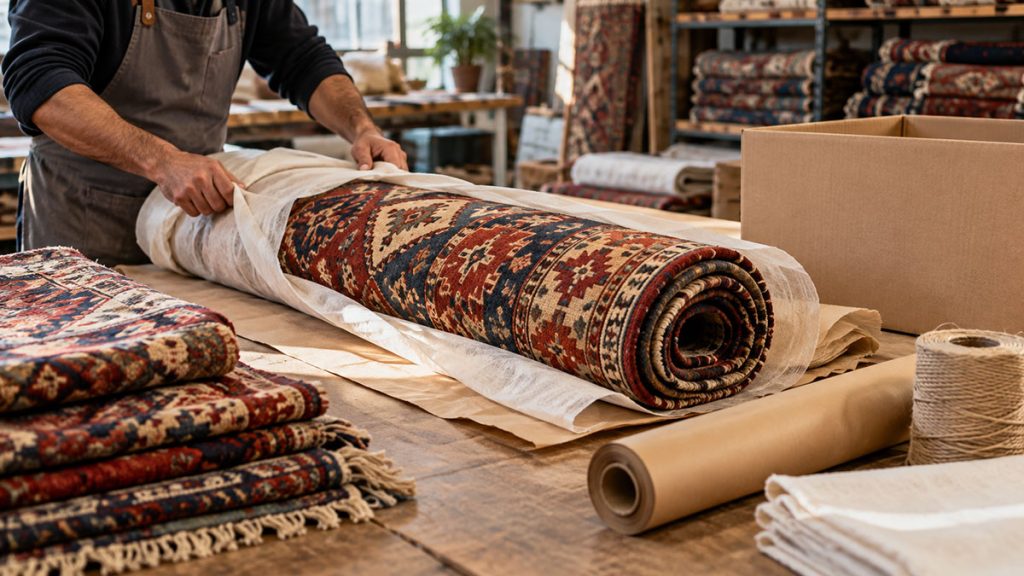
Shipping handmade textiles internationally requires more than simply folding the product and placing it inside a box.
Products such as Persian kilims, handwoven rugs, embroidered fabrics, and traditional textiles must be carefully inspected, protected, packed, and documented before they are ready for export.
For international buyers, understanding this process can help reduce shipping risks and ensure that handmade products arrive in good condition.
1. Final Quality Inspection
Before packing, each handmade textile should be carefully inspected.
The inspection usually includes checking:
- Dimensions
- Color consistency
- Weaving quality
- Fringe and edges
- Surface condition
- Visible stains or damage
- Product specifications
Because handmade textiles are produced individually, small differences in pattern, shape, or dimensions may naturally occur.
These variations are often part of the character of a handmade product rather than manufacturing defects.
2. Cleaning and Preparation
The textile should be clean and completely dry before packaging.
Dust, moisture, and surface contamination can cause problems during long-distance transportation or storage.
Depending on the textile type, preparation may include gentle surface cleaning, brushing, or professional cleaning.
For natural wool products, moisture control is particularly important.
3. Folding or Rolling the Textile
The correct packing method depends on the size, structure, and material of the product.
Smaller and more flexible textiles may be carefully folded, while larger rugs may be rolled.
A handwoven kilim is generally thinner and more flexible than a traditional pile carpet, which can make it easier to prepare for compact transportation.
However, excessive folding pressure should be avoided when it may affect the textile’s structure or appearance.
4. Protection Against Moisture and Dust
International shipments may pass through several warehouses, vehicles, airports, ports, or logistics centers.
For this reason, handmade textiles should be protected against:
- Moisture
- Dust
- Dirt
- Friction
- Accidental surface damage
Protective wrapping can help isolate the textile from external conditions during transportation.
The packaging should protect the product without trapping unnecessary moisture inside.
5. Secure Outer Packaging
After the textile has been wrapped, it is placed inside suitable outer packaging.
The type of packaging may vary depending on the order size.
For example:
- Individual pieces may use reinforced bags or cartons
- Multiple products may be packed together
- Wholesale orders may require stronger export cartons
- Large shipments may be prepared for palletized transportation
The objective is to keep the package compact, secure, and suitable for international handling.
6. Product Labeling
Clear labeling helps both the buyer and logistics provider identify the shipment.
Labels may include information such as:
- Product name
- Product code
- Dimensions
- Material
- Quantity
- Country of origin
- Package number
For wholesale orders containing several designs or sizes, proper labeling can also make inventory management easier when the shipment arrives.
7. Preparing Export Documents
International shipments normally require shipping and commercial documentation.
The exact documents depend on the destination country, transportation method, order value, and applicable customs requirements.
Common documents may include:
- Commercial invoice
- Packing list
- Shipping documents
- Product information
- Certificate of origin when required
- Customs documentation
Importers should always confirm the specific requirements of their destination country before shipment.
8. Packaging for Wholesale Orders
Wholesale textile shipments often require a different approach from individual orders.
Products may need to be grouped according to:
- Design
- Size
- Product code
- Collection
- Customer order
A detailed packing list helps the importer verify quantities and identify products quickly after delivery.
For B2B transactions, buyers may also request customized packaging or labeling based on their retail requirements.
9. Choosing the Shipping Method
The appropriate shipping method depends on several factors, including:
- Shipment size
- Total weight
- Destination
- Delivery schedule
- Shipping budget
Smaller orders may be suitable for air freight or international courier services, while larger commercial orders may require specialized freight solutions.
The final shipping method should be agreed upon between the supplier, buyer, and logistics provider.
Why Proper Packaging Matters for Handmade Textiles
Handmade textiles can represent many hours of skilled work.
Proper preparation helps protect the texture, color, shape, and craftsmanship of the product throughout the logistics process.
For international buyers, good packaging also creates a more professional receiving experience and reduces the risk of damage during transportation.
Handmade Persian Textiles for International Buyers
At IKAT, we work with selected Iranian handmade textiles and prepare products with international buyers in mind.
Product specifications, dimensions, materials, quantities, and packaging requirements can be discussed before shipment.
For wholesale, sourcing, or export inquiries, buyers can contact IKAT through our B2B inquiry service.
Frequently Asked Questions
Can handmade kilims be folded for international shipping?
Many kilims are flexible enough to be folded or rolled, depending on their size and construction. The packing method should be selected carefully to protect the textile.
How are handmade textiles protected from moisture?
Textiles should be completely dry before packing and protected with suitable packaging materials during transportation.
What documents are required for textile export?
Requirements vary by destination and shipment type. Commercial invoices, packing lists, shipping documents, and customs documentation are commonly required.
Can wholesale buyers request custom packaging?
Yes. Depending on order volume and supplier capabilities, packaging, labeling, and product grouping may be customized for wholesale buyers.