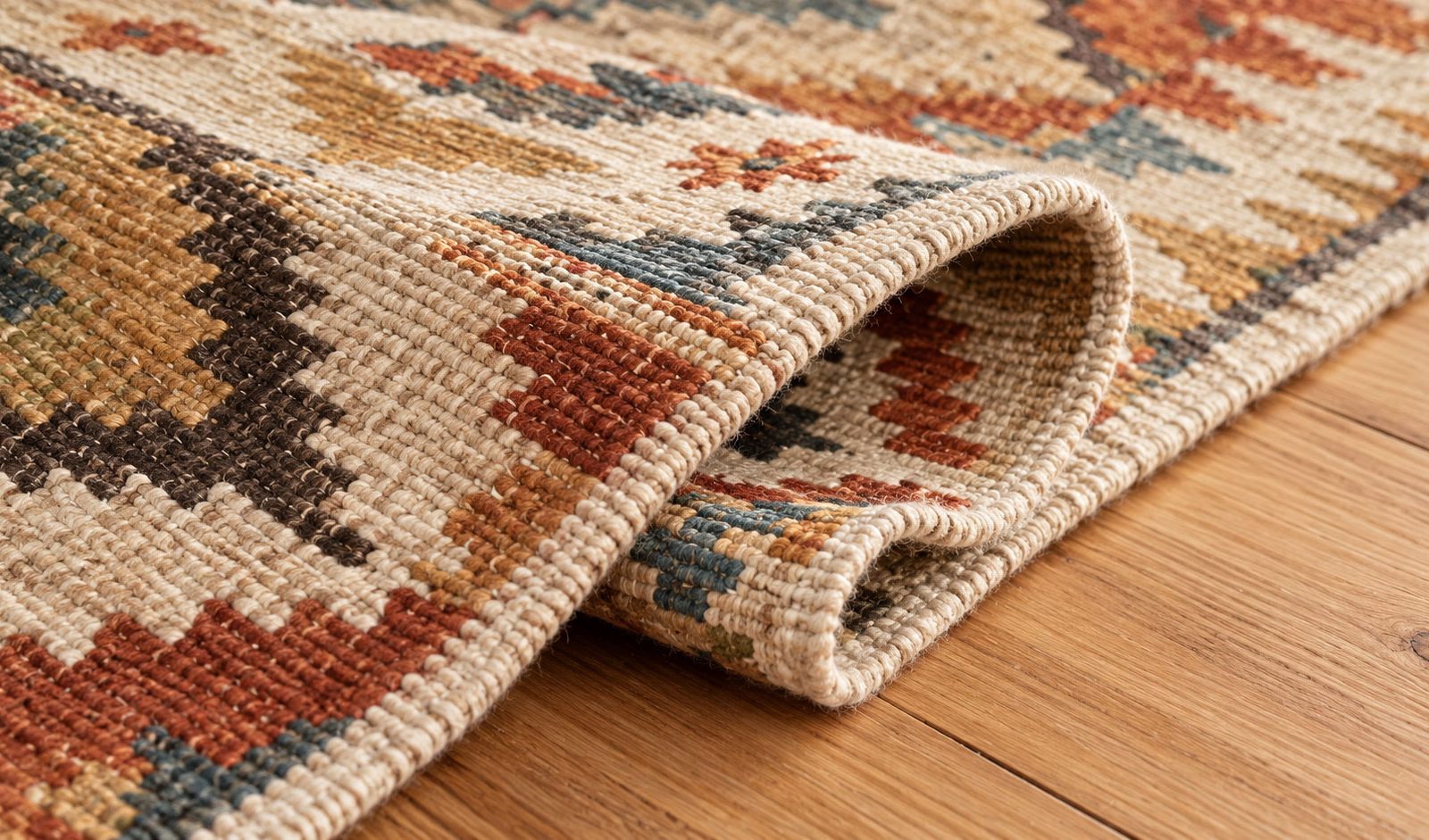
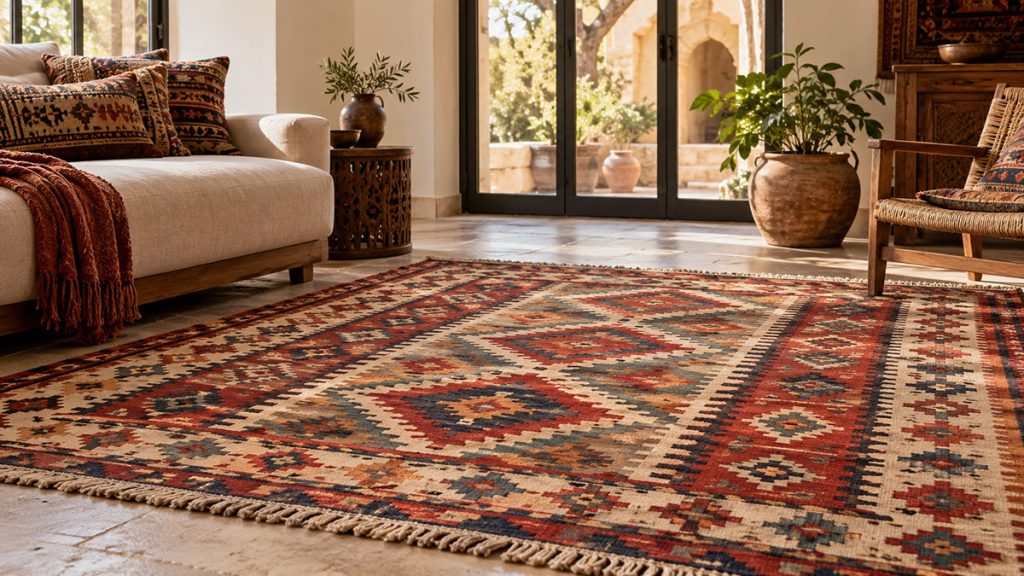
A Persian kilim is a traditional flat-woven textile made in Iran, known for its geometric patterns, natural materials, and strong connection to regional craftsmanship. Unlike pile rugs, kilims are woven without knots, creating a thinner, lighter, and more flexible surface.
For international buyers, Persian kilims offer a combination of authentic design, handmade quality, and practical use in both traditional and modern interiors.
What Makes a Persian Kilim Different?
The main difference between a kilim and a traditional Persian rug is the weaving technique.
Persian rugs usually have a soft pile created by thousands of individual knots. A handwoven Persian kilim, however, is made by tightly interweaving the warp and weft threads.
This creates a flat surface with no pile.
Because of this construction, kilims are generally:
- Lightweight and easy to transport
- Suitable for both floors and decorative use
- Easier to fold and store than heavy rugs
- Durable when properly maintained
- Available in a wide range of traditional patterns and sizes
Traditional Materials
Many authentic Persian kilims are woven using natural wool because of its durability, texture, and long history in Iranian weaving traditions.
Depending on the region and weaving style, materials may include:
- Sheep wool
- Cotton
- Natural or traditional dyes
- Occasionally a combination of wool and cotton
Natural wool can also give each piece subtle differences in texture and color, which is part of the character of a handmade product.
Patterns and Regional Identity
Persian kilims are often recognized by bold geometric shapes, repeated motifs, diamonds, lines, animals, plants, and symbolic forms.
Designs can vary significantly between different regions and tribal communities in Iran.
For example, a Qashqai kilim may feature strong geometric compositions and traditional tribal motifs. These designs reflect generations of weaving knowledge rather than mass-produced decorative patterns.
As a result, handmade kilims often have small variations that make each piece unique.
How Are Persian Kilims Used?
Although kilims were traditionally used as floor coverings, their lightweight structure makes them highly versatile.
International buyers commonly use Persian kilims as:
- Area rugs
- Wall decorations
- Furniture coverings
- Decorative textiles
- Interior design accents
- Collectible handmade crafts
Their combination of traditional patterns and natural textures also allows them to work well in contemporary, minimalist, rustic, and bohemian interiors.
What Should International Buyers Check Before Buying?
When sourcing Persian kilims, especially for retail, wholesale, or interior design projects, buyers should check several important details.
Material
Confirm whether the kilim is made from wool, cotton, synthetic fiber, or a combination of materials.
Dimensions
Handmade textiles may have slight dimensional variations. Accurate measurements should always be provided before purchase or bulk ordering.
Weaving Method
Ask whether the product is fully handmade, handwoven, or machine-produced.
Color and Dye
Colors may come from natural, traditional, or industrial dyes. Handmade pieces can also show minor color variations.
Design Origin
Understanding the regional or tribal background of a design can add cultural and commercial value to the product.
Care Instructions
Buyers should also confirm washing and maintenance recommendations, particularly for natural wool products.
Why Persian Kilims Appeal to Global Buyers
Persian kilims combine function, craftsmanship, and cultural heritage in one textile product.
Unlike standardized factory-made rugs, a handmade kilim carries visible characteristics of the weaving process. Small differences in pattern, dimensions, and texture are not necessarily defects; they can be part of the handmade identity of the piece.
For retailers, designers, and importers looking for authentic Iranian textiles, Persian kilims can provide a distinctive product category with a strong story behind every design.
Source Persian Kilims from Iran
At IKAT, we introduce and supply selected Iranian handmade textiles for international buyers.
Our collection includes traditional Persian kilims produced with attention to material, craftsmanship, design, and authentic regional character.
For product specifications, available designs, dimensions, packaging, or export inquiries, contact the IKAT team through our B2B inquiry service.
Frequently Asked Questions
Are Persian kilims handmade?
Traditional Persian kilims are handwoven, although machine-made products inspired by kilim designs are also available. Buyers should always confirm the production method before ordering.
What is the difference between a Persian rug and a kilim?
Persian rugs usually have a knotted pile, while kilims use a flat-weaving technique without pile. This makes kilims thinner and lighter.
Are Persian kilims washable?
Many wool kilims can be cleaned, but washing methods depend on the materials and dyes used. Professional cleaning is generally recommended for valuable handmade pieces.
Can Persian kilims be exported in bulk?
Yes. Depending on availability and supplier capacity, Persian kilims can be sourced for retail, interior design, wholesale, and international trade.